Herbal medicines are naturally occurring, plant-derived substances that are used to treat illnesses within local or regional healing practices. These products are complex mixtures of organic chemicals that may come from any raw or processed part of a plant In recent years, plant derived products are increasingly being sought out as medicinal products, nutraceuticals and cosmetics and are available in health food shops and pharmacies over the counter as self-medication or also as drugs prescribed in the non-allopathic systems. Herbal medicines widely used in healthcare in both developed and developing countries are complex chemical mixtures prepared from plants and are limited in their effectiveness because they are poorly absorbed when taken orally. According to an estimate of the World Health Organization (WHO), about 80% of the world population still uses herbs and other traditional medicines for their primary health care needs.
Information about Herbal Formulations
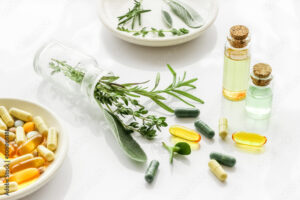
Herbal formulations have reached widespread acceptability as therapeutic agents for diabetics, arthritics, liver diseases, cough remedies, memory enhancers and adaptogens . Herbal medicine products are dietary supplements that people take to improve their health and are sold as tablets, capsules, powders, teas, extracts and fresh or dried plants . Herbals are traditionally considered harmless and increasingly being consumed by people without prescription. However, some can cause health problems, some are not effective and some may interact with other drugs.
Standardization is a system that ensures a predefined amount of quantity, quality & therapeutic effect of ingredients in each dose . Herbal product cannot be considered scientifically valid if the drug tested has not been authenticated and characterized to ensure reproducibility in the manufacturing of the product. Moreover, many dangerous and lethal side effects have recently been reported, including direct toxic effects, allergic reactions, effects from contaminants, and interactions with herbal drugs . Therapeutic activity of an herbal formulation depends on its phytochemical constituents.
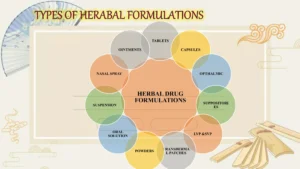
The development of authentic analytical methods which can reliably profile the phytochemical composition, including quantitative analyses of marker/ bioactive compounds and other major constituents, is a major challenge to scientists. Pharmaceutical semisolid preparation includes ointment, cream, paste emulsion gel and rigid foams. These preparations serve as a carrier for drugs. They contain one or more active ingredient dissolved or uniformly dispersed in a suitable base and any suitable excipients such as emulsifier, viscosity increasing agents and microbial agents and anti-microbial agents’ antioxidants or stabilizing agent etc. Ointment can adhere to the application surface for long period of time before they are washed off. These property of ointment helps for prolong drug delivery at the site of application. Ointments may be medicated or non-medicated. Oleaginous ointments are preferred for dry, chapped skin in the environment of low humidity because of its occlusive properties. Ointments are mainly evaluated by physical test like test for rate of absorption, test for non-irritancy, test for penetration, test of drug release, test of rheological property, test of content uniformity and also by microbiological test like microbial content and preservatives.